In this article
History is one of the most proven faceless niches on YouTube.
Oversimplified has built over 12 million subscribers without ever appearing on camera. Kings and Generals covers warfare from the ancient world to the 20th century using maps, illustrations, and narration. The format doesn’t require a face because the material is inherently visual: timelines, battles, maps, and archival imagery carry the story better than any talking head.
Here’s how to start your own faceless history channel, what to post, and what the revenue looks like.
Why History Works as a Faceless Niche
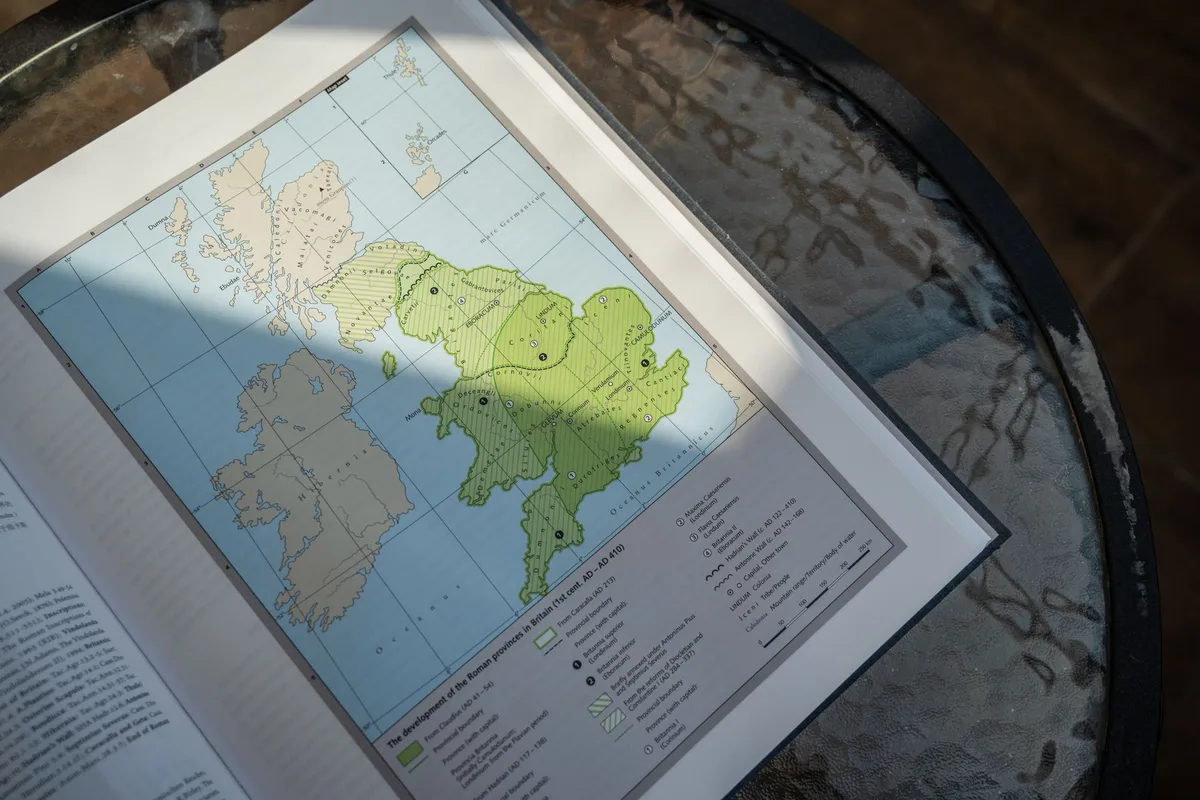
History content is driven by research, narration, and visuals — not by a presenter’s personality. Maps, illustrations, and archival footage carry the story. That makes history one of the cleanest faceless niches: going faceless isn’t a workaround, it’s how the best channels in the space actually operate.
The YouTube history audience watches for information, not for a face to relate to. They want a clear narrative about the fall of Rome or the decisions that led to World War I. A facecam adds nothing to that.
History also benefits from evergreen demand. A video explaining the causes of the Thirty Years War doesn’t age. It accumulates views over months and years rather than spiking at upload and dying. That compounding view library is what builds long-term revenue for history channels.
The niche is large. Education and history content represents a significant slice of YouTube’s daily watch time, and sub-niches like war history, ancient civilizations, and biography each have enough search volume to build a standalone channel on.
What to Post: Content Formats That Work
History content clusters into a few repeatable formats. The best performers for faceless channels:
Timeline and event explainers:
- “Why did the Roman Empire fall?” structured as a clear argument
- Battle breakdowns (maps, troop movements, turning points)
- Decade-by-decade or era-by-era walkthroughs
Biography videos:
- Deep dives on historical figures most people have heard of but don’t actually know
- “The rise and fall of” format (Napoleon, Genghis Khan, Stalin)
- Overlooked figures who shaped major events
“What if” alternate history:
- What if Germany won World War I?
- What if the Byzantine Empire survived?
- Speculative but research-grounded scenarios that perform well in recommendation
Untold history and hidden stories:
- Events that happened but aren’t taught in schools
- Non-Western history (Songhai Empire, Khmer Empire, Aztec trade networks)
- Behind-the-scenes of famous events
Short-form explainers:
- “What was the Silk Road?” in under 10 minutes
- Bite-sized history for YouTube Shorts
- “History in 60 seconds” series format
Documentary-style investigations:
- Multi-part series on a war or civilization
- Primary source walkthroughs
- Archive footage compilations with voiceover narration
The timeline explainer and battle breakdown formats tend to get the most search traffic because people search “why did X happen” and “how did the Battle of Y go.” Documentary series formats build loyal subscribers but rely more on algorithmic recommendation to grow.

How Much Can You Make?
History RPMs typically range from $5 to $15. That’s mid-tier for YouTube niches — lower than finance, but meaningfully higher than gaming or entertainment. The premium comes from education-category advertisers: online learning platforms, book subscription services, travel companies promoting historical destinations, and documentary streaming services all pay above-average CPMs.
| Monthly Views | Estimated RPM | Estimated Monthly Revenue |
|---|---|---|
| 10,000 | $5–$10 | $50–$100 |
| 50,000 | $6–$12 | $300–$600 |
| 100,000 | $7–$15 | $700–$1,500 |
| 500,000 | $8–$15 | $4,000–$7,500 |
These are AdSense estimates for a primarily US/UK/AU audience. History channels that attract a global audience will see lower averages. All figures are ranges based on publicly reported creator data — your actual RPM will depend on audience geography, seasonality, and video topic.
Beyond AdSense, history channels add revenue through:
- Merchandise (historical artwork, themed apparel — history audiences buy at reasonable rates)
- Patreon (extended cuts, source documents, early access — history audiences support creators they trust)
- Affiliate links (book recommendations embedded in video descriptions; Amazon Associates is the standard here)
- Sponsorships from audio book platforms (Audible, Storytel), VPN services, and online course platforms
The book affiliate angle is worth noting. History videos naturally reference books. A channel discussing the fall of Constantinople can link to a half-dozen relevant books in the description and earn affiliate commissions on every sale. This is one of the few niches where Amazon Associates is a genuinely reliable secondary revenue stream.
Not sure which niche fits your situation? The 75 Best Faceless Niches Spreadsheet ranks 75+ niches by CPM, competition density, and production difficulty.
Free. Instant download.
Tools You Need

History production is text-heavy and asset-light. You don’t need expensive footage because most visual content is sourced from public domain archives.
- Research: Wikipedia is a starting point, not a source. Use it to identify primary sources and academic papers. Google Scholar and JSTOR provide peer-reviewed material for free (with limits). Many university libraries have digitized archives.
- Visuals: Wikimedia Commons has millions of public domain historical images, paintings, maps, and photographs. The Library of Congress Digital Collections offers high-resolution archival images free for noncommercial use. Pexels covers generic b-roll (landscapes, architecture, establishing shots).
- Voiceover: Your own voice with a $50 to $100 USB mic is the strongest option for storytelling formats. AI narration (ElevenLabs, PlayHT) works for compilation-style content but sounds flat during emotional narrative peaks.
- Editing: DaVinci Resolve (free) handles multi-track timelines, color grading, and motion graphics without a subscription. CapCut is faster for simpler edits.
- Maps and graphics: Many history channels use simple animated maps. Inkarnate is a paid tool for custom fantasy and historical maps. For basic directional arrows and troop movement overlays, Canva works without any map-drawing skill.
- Music: Epidemic Sound is the standard for licensed background music. Orchestral and cinematic tracks are abundant and clear for monetization. YouTube Audio Library has free options but selection is limited.
- Scripts: History videos need tight scripts. Aim for 150 to 180 words per minute of video. A 10-minute video needs an 1,800-word script, minimum.
Total startup cost for a history channel: $50 to $200. The research time is the real investment, not the gear.
The Competition Picture
History is not an empty niche. Several large channels dominate broad topics: Oversimplified owns the animated comedy-history format, Kings and Generals covers military history at scale, and Toldinstone has built authority in ancient history specifically. These channels are effectively unbeatable on their exact formats.
But most history content on YouTube covers the same 30 topics (World War II, the Roman Empire, the Mongols) because creators go where the search volume is highest. The competitive gap is in topics those channels haven’t covered.
Underserved sub-niches worth building in:
- Non-Western history — African empires (Mali, Songhai, Benin), Southeast Asian kingdoms (Srivijaya, Khmer), Mesoamerican civilizations. These have search volume and almost no dedicated faceless channels.
- Economic and trade history — How money worked in ancient Rome, why the spice trade funded empires, the economics of the Silk Road. A niche within the niche that hasn’t been fully claimed.
- Short-format history — “History in 8 minutes” channels for people who want to learn but won’t watch a 45-minute documentary. YouTube Shorts and mid-length videos in this style are growing.
- Regional history from a local angle — History content about a specific country or region tends to perform well with diaspora audiences and local search traffic.

How to Start This Week
- Pick one sub-niche: military history, ancient civilizations, biography, economic history, or regional history — not “all of history”
- Search your chosen sub-niche on YouTube and find 10 to 20 channels. Note which videos have the most views relative to the channel’s total subscriber count
- Script your first video on a topic with clear search intent (“why did the Ottoman Empire collapse,” “how did Alexander the Great die,” “what was the Black Death”)
- Source visuals from Wikimedia Commons and the Library of Congress before spending anything
- Record narration at a slow, deliberate pace — history content rewards clarity over speed
- Build a simple thumbnail: bold text, a single focal image (historical portrait, map, or artifact), dark background
Your first 10 videos exist to develop your research and production workflow, not to go viral. The compounding search traffic from evergreen topics starts paying off at month 3 to 6, not week 1.
See the best faceless YouTube niches guide for how history compares to other niches on CPM, competition density, and production difficulty.
Common Mistakes in Faceless History
- Covering what the big channels already own. A new channel making another “why did Rome fall” video is competing head-on with channels that have 5 million subscribers. Find the gap.
- Sourcing errors. History audiences are knowledgeable and will correct you publicly. Cite your sources on screen, acknowledge disputed dates and interpretations, and script conservatively. A factual error costs you credibility permanently in this niche.
- Poor thumbnail differentiation. History thumbnails cluster around the same aesthetic — dark backgrounds, red text, warrior imagery. A distinctive visual style matters more here than in most niches.
- Using copyrighted images. Film stills, modern photographs, and recently-published maps have copyright protection. Public domain images from Wikimedia Commons and government archives are safe. Check the license before downloading anything.
- Underestimating script length. A 10-minute history video needs more research and writing than a 10-minute tutorial in most niches. Budget 3 to 6 hours of research and writing time per video when starting out.
- Ignoring the description. YouTube’s algorithm uses video descriptions for topic signals. Book titles, historical names, events, and dates in your description help with search discovery.
Faceless history channels at a glance
| Dimension | Verdict |
|---|---|
| Niche | Faceless history education — narration over public domain visuals, maps, illustrations, and archival footage |
| Exemplar channels | Oversimplified, Kings and Generals, Toldinstone, History Matters |
| Format | Researched script narrated over sourced visuals (no custom footage required), 8–20 min explainers or 30–60 min documentary-style |
| Production difficulty | Medium. Script research is the bottleneck — 3–6 hours per video when starting. Sourcing public domain visuals is easy and free |
| Repeatability | Very high. Thousands of historical events, figures, and periods untouched by dedicated channels. Evergreen topics accumulate views for years |
| First video angle | One focused explainer on a clear search query. Example: “Why did the Byzantine Empire survive so much longer than Rome?” — 10 min, maps from Wikimedia Commons, slow narration |
| Monetization path | $5–$15 AdSense RPM. Book affiliate links (Amazon Associates) are the most natural secondary revenue in this niche. Audiobook platform sponsorships (Audible, Storytel) are the common sponsor type |
| Risk | Copyright on images (check licenses), factual accuracy (history audiences correct errors publicly), and topic saturation on the most-searched events |
| Recommended next step | Compare history against finance, horror, and motivation niches before committing — each has different production requirements and revenue ceilings |
Not sure which niche fits your situation? The 75 Best Faceless Niches Spreadsheet ranks 75+ niches by CPM, competition density, and production difficulty. Filter to what fits your research tolerance, production time, and revenue goals.
Free. Instant download.
Keep Reading
- Top Faceless YouTube Niches — which niches are actually accessible when your channel has zero history
- Faceless Finance Channel — the highest-CPM faceless niche, if you can handle the research requirements
FAQ
Can I use historical footage and images from movies and documentaries? No. Film footage and documentary clips are copyrighted, even if the events they depict are not. Use public domain sources: Wikimedia Commons, the Library of Congress, Prelinger Archives (hosted on Internet Archive), and government historical archives. Many countries have digitized their national photo collections and made them free for noncommercial use.
Do I need to be a historian to run a history channel? No. What you need is accurate research, clear attribution of sources, and the discipline to flag disputed facts as disputed. Channels like Oversimplified simplify complex events with humor rather than academic depth. What hurts credibility isn’t lack of a degree — it’s presenting contested interpretations as settled fact, or getting basic dates wrong.
How long should faceless history videos be? The most common performing formats are 8 to 15 minutes for event explainers and 20 to 45 minutes for documentary-style deep dives. Shorter videos (under 8 minutes) can work for Shorts-style content or “history in minutes” series. Watch time percentage matters more than absolute length — a 12-minute video where viewers watch 70% outperforms a 20-minute video where they drop off at 40%.
Which history sub-niche is easiest to start with? Biography. A “rise and fall of” video about a well-known historical figure (Genghis Khan, Catherine the Great, Napoleon) has clear search intent, abundant public domain imagery, and a natural narrative structure. You don’t need to master the politics of an entire era — just one person’s story told well.
How do I grow a history channel faster? Publish on search demand first. Use YouTube’s search bar autocomplete to find topics people are actively looking for. A video titled “What was the Silk Road” will get consistent search traffic; a video titled “The Untold Story of My Favorite Silk Road Merchant” will get almost none. Once you have traction from search, the algorithm starts recommending your videos. See the top faceless YouTube niches breakdown for context on how history compares to other search-driven niches.
What to Do Next
You have a frontrunner. Pressure-test it before you commit.
Compare this niche against 9 others
The Niche Map ranks 10 high-paying faceless niches and gives the audience, monetization path, and first video idea for each. Use it as a final shortlist check before you commit.
Free. No spam. Unsubscribe anytime.
Browse Channels Explorer
50 real faceless channels with format, niche, and production notes. Free, no signup.
Open Channels ExplorerComplete Launch Pack
Vol 1 FULL plus Channel Setup Kit plus First Video Command Center. One bundle, no upsell pressure.
$9 $19 53% off Lowered for first-time creators.