In this article
Fun facts channels are the simplest faceless niche to start.
No expertise required. No complicated equipment. No talking-head setup. You pick a topic with search demand, write a list of 10-15 facts, layer narration over stock footage, and post. The format has produced channels with millions of subscribers. Here’s what the niche looks like from the inside.

Why Fun Facts Works as a Faceless Niche
Fun facts content is driven by curiosity, not personality. Stock footage, simple graphics, and clear narration carry the entire production. There’s no reason for a face on camera, and the biggest channels in this space don’t show one.
Fun facts and trivia content works because the supply of interesting topics is infinite. History, science, geography, psychology, food, money: every category has facts most people don’t know and would spend five minutes watching. The format maps directly to faceless production. You need a clear script, narration over relevant b-roll, and a thumbnail that opens a curiosity loop.
The niche isn’t monolithic. “Fun facts” is an umbrella covering dozens of sub-niches. Science trivia, history facts, psychology research, geography deep-dives, world records, dark historical moments, food science: each has its own audience, CPM ceiling, and competitive density. Channels that position around “fun facts about everything” tend to stay small. Channels that own a specific corner (“psychology facts backed by research” or “obscure moments in military history”) build loyal audiences the algorithm can consistently recommend.
The production loop is repeatable: pick a topic with search demand or viral potential, script 10-15 facts, source stock footage to illustrate each point, record or generate narration, edit, and publish. Most fun facts videos can be completed in 3-6 hours once a workflow is established. That batch-producibility is the niche’s core operational advantage.
What to Post: Content Formats That Work
Fun facts content clusters into a few proven formats:
Numbered list videos (most common):
- “10 facts about [topic] that will surprise you”
- “15 things you didn’t know about [place, person, or event]”
- High click-through because the numbered format promises a clear, digestible structure
“Did you know” explainers:
- Opens with one surprising fact, then unpacks the backstory
- 5-8 minutes; works well for single-topic deep-dives
- Higher completion rate than multi-topic lists when the hook is strong
Comparison and scale videos:
- “The most extreme things in history, ranked”
- “How [country, animal, or phenomenon] compares to what most people imagine”
- Strong shareability; works across geography, science, and history sub-niches
“The dark side of” format:
- Reframes a familiar topic through an unexpected angle
- Consistently high click-through rates due to pattern interruption
- Works across history, food, corporations, and government topics
Record and extreme fact collections:
- “The longest, biggest, deadliest, rarest”
- Feeds natural curiosity about limits and outliers
- Adapts well to Shorts format for subscriber acquisition
The numbered list video and the single-topic explainer produce the most consistent search traffic. The “dark side of” and comparison formats depend more on algorithmic recommendation, with stronger viral upside but less predictable growth.

How Much Can You Make?
Fun facts channels sit in the entertainment category, and entertainment content generally posts lower CPMs than education or finance. General-audience trivia channels typically report RPMs in the $1.50 to $5 range, based on publicly documented creator data. Sub-niches with more specific advertiser demand pull significantly higher:
| Sub-Niche | Typical RPM Range | Advertiser Category |
|---|---|---|
| Psychology and behavior | $4–$10 | Mental health, self-improvement, courses |
| History and war | $3–$8 | Documentaries, education, books |
| Science facts | $4–$9 | Tech, online learning, supplements |
| Geography and culture | $2–$5 | Travel, language apps |
| General “fun facts” | $1.50–$4 | Broad audience, lower advertiser specificity |
These ranges are based on publicly reported creator data and community-reported benchmarks. Individual results vary by audience geography, watch time, and topic specificity. Channels with a primarily US, UK, and Australian audience see higher RPMs than those with significant traffic from South or Southeast Asia.
| Monthly Views | RPM (Mid Range) | Estimated Monthly Revenue |
|---|---|---|
| 20,000 | $3–$5 | $60–$100 |
| 100,000 | $3–$7 | $300–$700 |
| 500,000 | $4–$8 | $2,000–$4,000 |
| 1,000,000 | $4–$10 | $4,000–$10,000 |
Beyond AdSense, fun facts channels have secondary revenue paths:
- Sponsorships — Online course platforms (Skillshare, Masterclass), audiobook services (Audible, Blinkist), and VPNs sponsor fun facts channels regularly. First sponsorship inquiries typically arrive around 30,000-50,000 subscribers, though individual creators report earlier outreach from smaller sponsors.
- Affiliate — Audible and Blinkist affiliate programs align naturally with knowledge-focused audiences and pay commission per referral. Amazon Associates works for book recommendations in video descriptions.
- Merchandise — Trivia-themed products are possible but less common for this niche than for personality-driven channels.
Not sure which niche fits your situation? The 75 Best Faceless Niches Spreadsheet ranks 75+ niches by CPM, competition density, and production difficulty.
Free. Instant download.
Tools You Need
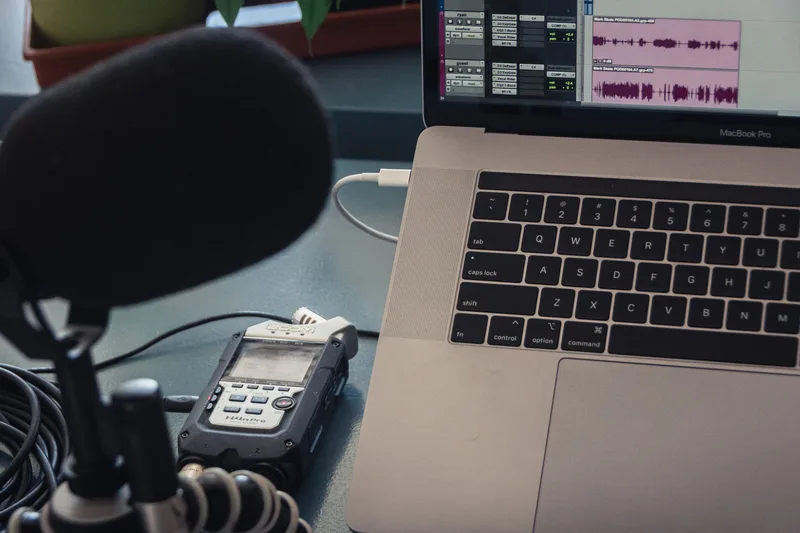
Fun facts production doesn’t require expensive tools. The bottleneck is research and scripting, not equipment.
Visuals:
- Stock footage: Pexels and Pixabay cover most general topics at no cost. For historical content, Wikimedia Commons has millions of free images, historical photos, and public domain materials. Library of Congress publishes curated free-to-use collections across history, science, and culture.
- Simple graphics: Canva handles text overlays, fact cards, and basic animated elements. Most fun facts channels use text-on-screen for each fact as a visual anchor between cuts.
- Map and data visuals: For geography content, recording a Google Earth flyover or using a free tool like Flourish.studio for animated charts adds production value without stock footage costs.
Voiceover: AI narration is widely used in fun facts channels and fits the format well. ElevenLabs and PlayHT produce natural-sounding results appropriate for this content type. Recording your own voice with a USB microphone in the $50-$100 range works equally well and builds channel personality over time.
Research and scripting:
- Wikipedia for initial topic framing (starting point only, not for specific claims)
- Britannica for more reliable fact verification
- Guinness World Records for records and extremes
- Perplexity AI accelerates the “what are the 15 most interesting angles on this topic” phase
Editing: DaVinci Resolve handles full multi-track editing at no cost. CapCut is faster for simpler timeline arrangements. Most fun facts videos have a straightforward structure: narration, stock footage b-roll, text overlays, and background music.
Music: Background music matters more in fun facts content than in tutorial-heavy niches, because the music carries emotional tone between facts. Epidemic Sound and Artlist both have libraries suited to this format. Choose tracks with low vocal presence and consistent energy that doesn’t compete with the narration.
Total startup cost: under $150 using free and low-cost tools. Research and scripting time is the real input.
The Competition Picture
Fun facts is competitive at the top. Large channels like Bright Side (built to tens of millions of subscribers on the fun facts and listicle format), Factnomenal, and MostAmazingTop10 dominate broad search terms. General “fun facts” keywords are well-contested.
The structural opportunity is in specificity. Most large channels cover broad topics: “amazing facts about space,” “weird facts about animals.” They don’t own a niche. They cover everything. That creates clear gaps for channels with a defined sub-niche and consistent positioning.
Sub-niches with real room for new channels:

- Psychology and cognitive science facts — “Why your brain does X” content. Combines science credibility with self-improvement appeal. The advertiser mix drives higher CPMs than general entertainment, and fewer dedicated channels cover this specific angle.
- Dark history and uncomfortable truths — Historical events, corporate scandals, and government decisions that didn’t make the textbooks. High click-through from the “dark side of” framing. Works best as its own channel identity rather than one format mixed into a broader channel.
- Food science and culinary facts — How food is made, what’s actually in processed food, why certain combinations work or don’t. Food advertisers, kitchen product affiliates, and cooking course sponsors are consistent buyers. The dedicated-channel version of this topic is underserved.
- Geographic oddities and border trivia — Country borders, exclaves, disputed territories, places that don’t fit where you’d expect. Strong engagement from geography enthusiasts, low production complexity.
- Animal and nature extremes — Focusing specifically on extreme survival behaviors, record holders, and counterintuitive adaptations. Narrows the broad “nature” category into something the algorithm can reliably place.
- Money and economic history — How currencies failed, the history of banking crises, economic events most people misremember. Sits at the crossover between fun facts and personal finance advertiser CPMs.
A new channel should own one of these sub-niches, not mix them. Posting psychology facts one week and geography trivia the next teaches the algorithm nothing and prevents a consistent subscriber base from forming around a topic.
How to Start This Week
- Pick one sub-niche from the list above, then write out 20 possible video topics before committing. If you can’t generate 20 topics, the sub-niche is either too narrow or you don’t have enough genuine interest to research it consistently.
- Search your chosen sub-niche on YouTube. Look at videos with strong view-to-subscriber ratios on smaller channels. Those represent search demand, not viral luck. Note which titles and formats are working at that scale.
- Script your first video using 12-15 facts. Each fact follows a simple structure: state the surprising detail, briefly explain why it’s true or how it came to be, then move on. Don’t over-explain. The format rewards clarity and pacing over depth.
- Source your footage before recording. Confirm you have at least one relevant visual per fact. This forces you to identify gaps in the script before you’ve committed narration to it.
- Build your thumbnail around a single striking image and a question or incomplete statement. “Why the human brain does this every night” outperforms “10 Amazing Facts About Sleep” for click-through. Specific and incomplete beats generic and complete.
- Post your first three videos before judging the results. Early view counts on a new channel reflect the absence of subscribers and search history, not content quality. Three videos give the algorithm something to pattern-match before drawing conclusions.
Common Mistakes in Faceless Fun Facts
- Treating “fun facts” as the niche. “Fun facts” isn’t a niche any more than “interesting videos” is a genre. The algorithm matches content to audiences by topic. A channel that posts science facts one week and celebrity trivia the next won’t build a coherent subscriber base or rank for any specific topic.
- Publishing unverified facts. The “did you know?” format invites shortcuts. A single widely-shared false fact generates correction comments, ratio engagement, and credibility damage. Verify every claim against a reliable source before publishing. Wikipedia is a starting point, not a source.
- Over-relying on overused stock footage. Popular clips appear across hundreds of channels because they’re the top results on the same free sites. Viewers notice repetition. Wikimedia Commons, the Library of Congress, and NASA’s image library offer free material that’s less overused.
- Ignoring Shorts. Fun facts content adapts naturally to 60-second format. A single compelling fact with a quick explanation can drive subscriber growth that the long-form channel then captures. Treating Shorts and long-form as separate strategies misses the funnel.
- Weak thumbnails. Fun facts channels depend heavily on click-through rate for algorithmic distribution. A thumbnail that doesn’t create a curiosity gap suppresses distribution even on well-researched content.
- No content backlog before launching. The format only works if you can publish consistently. Build a backlog of 10-15 researched topics before posting the first video. Running out of ideas at video 8 breaks momentum at exactly the wrong time.
Faceless fun facts channel at a glance
| Dimension | Verdict |
|---|---|
| Niche | Faceless trivia and fun facts — narrated lists and explainers over stock footage, public domain imagery, and simple text graphics |
| Exemplar channels | Bright Side (broad), Factnomenal, MostAmazingTop10 |
| Format | Numbered lists, “did you know” explainers, comparison videos, “dark side of” format — 6 to 12 minutes |
| Production difficulty | Low to medium. Research and fact-verification is the bottleneck. Production itself is straightforward once a workflow is set. |
| Repeatability | Very high. Every sub-niche contains thousands of topics with evergreen search demand |
| First video angle | A numbered list of surprising facts in your chosen sub-niche. Example: “10 psychology facts that explain why you make bad decisions” |
| Monetization path | $1.50–$10 AdSense RPM depending on sub-niche. Audiobook platforms and online learning sponsors are the most natural first sponsor category |
| Risk | Fact accuracy errors damage credibility permanently; broad positioning prevents algorithmic traction; high competition on generic “fun facts” keywords |
| Recommended next step | Compare against science and history channels — both overlap with trivia content and carry different CPM ceilings and production requirements |
Not sure which niche fits your situation? The 75 Best Faceless Niches Spreadsheet ranks 75+ niches by CPM, competition density, and production difficulty. Filter to what fits your research tolerance, production time, and revenue goals.
Free. Instant download.
Keep Reading
- Top Faceless YouTube Niches — how fun facts stacks up against finance, history, motivation, and 70+ other niches
- Faceless Science Channel — close cousin to fun facts, with higher CPMs from education and tech advertisers
FAQ
Can I use AI to write the scripts for a fun facts channel? Yes, and most channels in this space do. AI tools accelerate the drafting and structuring process significantly. The bottleneck isn’t writing speed. It’s fact accuracy. AI models generate plausible-sounding details that aren’t always correct, including fabricated statistics and misattributed historical events. Use AI to draft and structure, then verify every specific claim against a reliable source before recording.
How long should fun facts videos be? The most consistent performers run 6 to 12 minutes for list-format content. Shorter videos in the 4 to 7 minute range work if pacing is tight and the hook is strong. Videos over 15 minutes underperform in this format unless the topic has strong search demand for longer coverage. Shorts (under 60 seconds) serve a separate function — subscriber acquisition — and should be treated as a distinct publishing track rather than a replacement for long-form.
Do I need to cite sources on screen or in the description? Citing sources in the video description builds credibility and protects you when a fact is challenged in comments. You don’t need formal citations on screen, but a source list in the description is a reasonable baseline. More practically: if you can’t find a credible source for a fact, don’t include it. The “I read it somewhere” problem is how fun facts channels get clipped for spreading misinformation.
Which fun facts sub-niche has the least competition for a new channel? Food science, psychology, and geographic oddities are the most underserved relative to their search demand, based on the competitive landscape across YouTube category searches. “Science fun facts” and “history trivia” have more established channels. The lowest absolute competition exists in highly specific intersections such as “fun facts about [specific country]” or “surprising facts about [specific industry]”, but those may lack sufficient volume to build a channel around.
How often should I post to grow a fun facts channel? One to two videos per week is the range most commonly cited by creators who’ve grown successfully in this format. More frequent posting builds search index faster but risks quality dropping. Fewer than one video per week significantly slows algorithmic learning and subscriber growth. The bottleneck is usually research quality, not editing time. Plan your research schedule around your publishing frequency rather than the other way around.
What to Do Next
You have a frontrunner. Pressure-test it before you commit.
Compare this niche against 9 others
The Niche Map ranks 10 high-paying faceless niches and gives the audience, monetization path, and first video idea for each. Use it as a final shortlist check before you commit.
Free. No spam. Unsubscribe anytime.
Browse Channels Explorer
50 real faceless channels with format, niche, and production notes. Free, no signup.
Open Channels ExplorerComplete Launch Pack
Vol 1 FULL plus Channel Setup Kit plus First Video Command Center. One bundle, no upsell pressure.
$9 $19 53% off Lowered for first-time creators.