In this article
Music channels look easy. They look passive. Post some chill beats over an anime café scene and watch the views roll in. That framing misses the real picture: sub-niche choice here separates a channel earning $0.80 RPM from one earning $12. A lo-fi playlist channel and a music theory channel both call themselves “music content” and they are running completely different businesses with completely different economics. Picking the right format before your first upload is the only strategic decision that matters.
Why Music Works as a Faceless Niche
Music content works without a face because the content itself is the product. A lo-fi channel is a listening environment — the creator is never part of the experience. A music theory channel explains concepts through animated notation and narration — no visible host required. A music history documentary runs on archival visuals and voiceover. None of these formats have any structural need for a person on screen.
The category is enormous. Music consistently ranks among YouTube’s highest watch-time categories, with average session times longer than most other content types. That watch time translates directly into advertiser reach — and advertiser interest in music audiences varies significantly by sub-niche, which is where the real economic differentiation happens.
The structural constraint is copyright. YouTube’s Content ID system flags copyrighted audio automatically and either claims revenue from the upload or removes it outright. Running a music channel without understanding licensing means losing monetization on your earliest videos — the ones that take the longest to build search traction. The sub-niches that work for faceless creators sidestep this entirely: licensed music from platforms like Epidemic Sound, original AI-generated audio, public domain recordings, or music education content that uses brief clips under commentary and criticism frameworks.
The creative range is wider than most niches. Playlists, theory tutorials, genre histories, instrument lessons, AI-generated music albums, music commentary, and production breakdowns all qualify as “music content” — with production requirements ranging from a few Canva animations to professional DAW screen recordings. What you pick determines your production ceiling, your audience, and your RPM.
What to Post: Content Formats That Build Audiences
Format choice is the most important pre-production decision for a music channel. Each format has a different audience, growth path, and advertiser market.
Lo-fi and ambient playlists: A looping visual — an anime-style café scene, rain on a window, a night cityscape — paired with a licensed lo-fi or ambient playlist running for one to eight hours. Viewers use this content as a listening environment while working, studying, or sleeping. The channel doesn’t need a creator voice at all. Channels in this format can grow audiences quickly because YouTube’s recommendation engine favors long watch sessions, and lo-fi content earns long sessions by design. The trade-off is RPM: the audience is using the content as background noise, not actively consuming it, which reduces advertiser conversion rates and keeps CPMs at the lower end of the range.
Music theory and education: Search-driven topics with clear, evergreen demand. “How to write a chord progression,” “what is the circle of fifths,” “understanding time signatures,” and instrument-specific theory queries get consistent monthly search volume year after year. The format uses animated notation software — MuseScore is free and exports clean animated notation visuals — combined with narration. Music software companies, instrument retailers, and online music education platforms are active advertisers here, which is why this sub-niche generates RPMs far above lo-fi or ambient content.
AI-generated original music: Tools like Suno generate complete songs with vocals and instrumentation from a text prompt. Channels built on AI-generated music can post original tracks, themed playlists, and “album releases” without copyright risk and without any music production skills. This is the fastest-growing format in the category in 2026 — early movers are establishing channel identities in specific AI-generated genres before competition arrives in volume.
Music genre documentaries and history: “The rise of lo-fi hip hop,” “how house music started in Chicago,” “the history of trap production” — evergreen documentary-style content built from stock footage of concert scenes, archival visuals, and narration. Watch times are long, audience engagement is high, and documentary and streaming service advertisers push CPMs above entertainment averages. Production takes more research time than playlists but earns better per-view economics.
Instrumental cover channels: Original instrumental arrangements of popular tracks, presented over abstract audio visualizers or minimal animated visuals. Cover licensing has clear rules — a mechanical license covers most standard cover situations in the US — and instrumental covers drive strong recommendation traffic from audiences searching for a familiar track in a new format.
Music reviews and commentary: Album breakdowns, production analyses, and “why this song works” explanations use narration over album artwork, audio clips under commentary fair use, and music visualizers. No face required. Consistent release cycles — new albums, reissues, anniversary coverage — provide a constant stream of fresh topics for the search and recommendation surface.
How Much Can a Faceless Music Channel Make?
Sub-niche is the primary RPM driver in music — more than content quality, posting frequency, or channel size. The advertisers paying premium rates in music content are music software companies, instrument retailers, and online music education platforms. They target music theory and education content specifically. Lo-fi and ambient channels serve a listening audience that advertiser categories don’t match as precisely.
| Sub-niche | Estimated RPM Range | Primary Advertisers | Competition Level |
|---|---|---|---|
| Lo-fi / ambient playlists | $0.50–$2.50 | General audience advertisers | Very high |
| Sleep / meditation music | $1.00–$3.50 | Wellness, app advertisers | High |
| Music theory / education | $5.00–$14.00 | Music software, instrument retailers | Medium |
| AI-generated music | $1.50–$4.00 | Emerging advertiser interest | Low (growing) |
| Music history / documentary | $4.00–$9.00 | Streaming services, documentary advertisers | Medium |
| Instrumental covers | $2.00–$5.00 | General music advertisers | Medium-high |
RPM ranges are based on publicly reported creator data for US-heavy audiences across these sub-niches. Geography significantly affects earnings: channels with primarily US and UK traffic see the higher end of each range; channels with large audiences from South or Southeast Asia see the lower end. RPMs also shift seasonally — Q4 advertising spend raises CPMs across all categories from October through December.
AdSense is not the only revenue path for music channels:
- Music distribution — Original AI-generated tracks uploaded to streaming platforms through services like DistroKid or TuneCore earn royalties independently of YouTube ad revenue. A channel with a library of original AI music earns from Spotify, Apple Music, and YouTube Music streams in parallel
- Channel memberships — Channels with engaged listening audiences can offer ad-free versions, exclusive playlists, and early track releases through YouTube channel memberships
- Sync licensing — Original instrumental music placed in other creators’ videos, commercial projects, and podcasts earns sync fees. Music licensing libraries facilitate placements for channels that generate consistent original content
- Merchandise — Channels with strong visual identities — lo-fi aesthetic channels, AI music brands with distinctive artwork — can sell digital and physical products tied to that identity without revealing a creator
Not sure which niche fits your situation? The 75 Best Faceless Niches Spreadsheet ranks 75+ niches by CPM, competition density, and production difficulty.
Free. Instant download.
What Tools Do You Need?
Tool requirements differ sharply by format. Choose tools based on the sub-niche first.
For lo-fi and ambient channels:
- Music licensing: Epidemic Sound covers standard YouTube monetization on the personal plan. Artlist offers a flat annual license with a deeper catalog for high-production-volume channels. Both provide licensing documentation that protects against Content ID claims. Neither requires attribution in the video itself.
- Visuals: Pexels has free looping video clips covering rain, café scenes, nature environments, and urban cityscapes — the standard lo-fi visual vocabulary. For custom aesthetic scenes, AI image generators like Midjourney produce consistent visual identities across a full channel.
- Editing: CapCut handles simple long-format playlist builds. DaVinci Resolve (free tier) gives more control over audio layering for ambient tracks that need precise mix management.
For music theory and education channels:
- Notation software: MuseScore is free and exports clean animated notation that reads well at standard YouTube resolution. For more precise animated theory visualizations, Manim — the Python animation library used by mathematics education channels — handles complex theory graphics at professional quality.
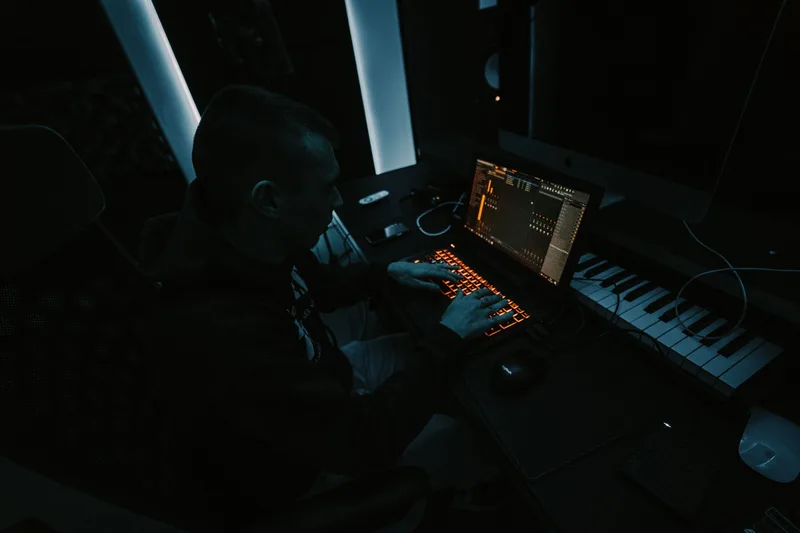
- DAW screen recording: OBS Studio records DAW sessions without latency or audio sync issues. Logic Pro, Ableton Live, and FL Studio are the standard production tools shown in music production tutorials.
- Voiceover: For theory and education content where the pace of explanation matters, a USB condenser microphone in the $50–$150 range produces recordings that outperform AI narration on clarity and instructional timing. ElevenLabs works well for longer educational videos where consistent tonal delivery over 15–20 minutes is a priority.
For AI music channels:
- Suno generates complete songs with full instrumentation and vocals from a text prompt. The Pro tier removes commercial restrictions and covers standard YouTube monetization. Udio is a direct alternative with different stylistic strengths — worth testing both against your target genre.
- Visualizers: AI-powered audio visualizer apps synchronized to music tracks serve as the primary visual layer for AI music channels. Canva Pro handles album artwork and thumbnail design with enough music-specific templates to maintain a consistent visual identity.
For all formats:
- Thumbnail and keyword research: TubeBuddy or vidIQ for music-specific keyword research and competitor channel analysis
- Canva Pro for thumbnail design — music channels rely heavily on thumbnails to differentiate in search and recommendation
Startup costs range from near-zero for AI music and lo-fi channels using Pexels stock and free tools to $100–$200/month for licensed music and professional animation software. Research quality and consistent publishing pace are the real production constraints in most music sub-niches, not budget.
What Does the Competition Look Like?

Music is one of YouTube’s most competitive categories at the established end. Lofi Girl and NoCopyrightSounds have dominant positions in their formats. Competing directly with these channels is not a viable strategy for a new channel.
The opportunity is in the formats they’ve structurally excluded themselves from and the micro-niches they can’t serve without confusing their existing audiences:
AI-generated music — The major lo-fi and ambient channels built their identities around licensed music from human producers. Pivoting to AI-generated content would conflict with their brand positioning. New channels built natively on AI music are differentiated by default and entering before direct competition concentrates.
Micro-niche playlists — “Focus music for software engineers,” “Japanese city pop study beats,” “dark ambient for writing fiction” — ultra-specific formats serve audiences the major lo-fi channels don’t target. Lower total volume, but more engaged audiences and stronger advertiser CPM targeting.
Music theory for specific instruments — “Guitar chord theory for beginners,” “piano voicings for jazz,” “drum fills explained for rock drummers” — instrument-specific theory content has consistent search demand and serves a smaller but dedicated audience. Competition is lower than general theory content, and guitar and piano hardware brands pay premium advertising rates to reach buyers in their research phase.
Genre-specific documentary content — Electronic music subgenres (ambient techno, hyperpop, bedroom pop, lo-fi punk), regional music histories, and production technique breakdowns serve dedicated communities before mainstream channels find them. Early coverage in a rising format builds an audience that grows as search volume for that genre increases.
A new channel should pick one corner of the market — one format, one sub-niche — and cover it with enough depth to establish topical authority before expanding. The channels that stall are the ones that post one lo-fi video, one theory video, and one genre documentary before the algorithm has enough data to route any of them.
How to Start This Week
- Pick one format and commit: lo-fi playlists, AI music, music theory, genre history, or instrumental covers. Each has a different production workflow, tool requirement, and economic outcome. Mixing them in the first 20 videos prevents the algorithm from understanding your channel
- Search your chosen format on YouTube. Note which videos have the highest view counts relative to the channel’s subscriber count — high views on a small channel signals search demand, not just algorithmic recommendation. That’s the terrain you’re entering
- For licensed music formats, activate Epidemic Sound or Artlist before your first upload. Content ID claims on your earliest videos reset organic traction permanently on those uploads
- Build your thumbnail system before posting. Music channels in search live on thumbnail and title clarity. Consistent visual identity across thumbnails — same color treatment, same font hierarchy, same layout logic — signals channel coherence to the recommendation system
- Script the first three videos before editing any of them. Batching production reduces the restart overhead on each video and surfaces topic overlaps that improve individual video quality
- Post the first three videos in the same week if possible. YouTube’s algorithm needs a cluster of thematically related content to establish what your channel covers. A single video followed by a two-week gap reads as a dormant channel in the recommendation queue
Expect search traffic to build meaningfully at months 3 to 6 for search-driven formats. Ambient and lo-fi channels grow on recommendation rather than search — that timeline is less predictable but can move faster when the recommendation system picks up a video in the first weeks.
Common Mistakes in Faceless Music Channels
- Starting in lo-fi because it looks easy. The format has low production barriers but extremely high competition and low RPM. Most new lo-fi channels post a handful of videos, see almost no views, and abandon the channel within weeks. If you want low production difficulty with better economics, music theory or AI music formats are more defensible entry points for a new channel
- Using copyrighted music without a license. YouTube’s Content ID system claims or removes videos using copyrighted audio regardless of attribution. A claimed video loses its AdSense revenue — and early claims teach the algorithm your channel is problematic. Use licensed music or original AI-generated audio from the start
- Treating music channels as passive income from day one. Lo-fi and ambient channels typically require several months of consistent posting before recommendation traffic builds meaningful volume. Channels that post a few videos and wait do not develop algorithmic momentum
- Picking a DAW-tutorial format without DAW access. Music production tutorial channels require demonstrating actual production workflows in real software. A tutorial channel that talks around the process without showing it in a real DAW loses credibility with the audience it needs most
- Skipping the thumbnail system. Music channel thumbnails are competing with album art, official artist pages, and established channels with large design budgets. Thumbnails that lack clear text hierarchy and consistent visual branding disappear in search results. Design the thumbnail before scripting the video — the title and thumbnail are the content concept, not the afterthought
Faceless music channels at a glance
| Dimension | Verdict |
|---|---|
| Niche | Music content without creator visibility — playlists, AI music, theory education, genre history, and instrumental covers |
| Exemplar channels | Lofi Girl (ambient playlists), AI music channels emerging 2025–2026, music theory channels using animated notation |
| Format | Long-format playlists (1–8 hours), theory explainers (8–20 min), genre documentaries (15–25 min), AI music tracks (3–6 min) |
| Production difficulty | Low for playlists and AI music. Medium for theory and documentary. Music licensing and copyright management are the primary non-production constraints |
| Repeatability | Very high for theory and history. High for AI music. Moderate for lo-fi, where trend sensitivity affects long-term search volume |
| First video angle | One specific, search-driven title in your chosen format. “Lo-fi beats for deep focus — 3 hours” or “How the I-IV-V chord progression works (and why it’s in every song)” |
| Monetization path | $0.50–$2.50 RPM for ambient and playlist formats; $5–$14 RPM for music education with US-heavy audiences. AI music adds distribution royalties and sync licensing revenue streams independent of YouTube ad revenue |
| Risk | Copyright infringement on music; algorithm volatility for non-search formats; sub-niche choice that doesn’t align with advertiser demand |
| Recommended next step | Compare music against fitness and science — each has a different CPM ceiling and production requirement |
Not sure which niche fits your situation? The 75 Best Faceless Niches Spreadsheet ranks 75+ niches by CPM, competition density, and production difficulty. Filter to what fits your research tolerance, production time, and revenue goals.
Free. Instant download.
Keep Reading
- Top Faceless YouTube Niches — how music stacks up against science, fitness, history, and 70+ other niches ranked by CPM and competition
- Faceless Fitness Channel — higher CPM ceiling from supplement and equipment advertisers with different production requirements
- Faceless Science Channel — similar documentary-style production approach with stronger advertiser targeting in tech and education categories
Frequently Asked Questions
Can I use copyrighted music on a faceless music channel? No. YouTube’s Content ID system automatically flags and either claims revenue from or removes videos using copyrighted audio, regardless of attribution or credit. Use licensed music from platforms like Epidemic Sound or Artlist, create original music using AI tools like Suno, or publish commentary on existing music using brief clips under fair use commentary frameworks. Copyright claims on early uploads suppress channel growth permanently on those videos.
What RPM can a faceless music channel expect? Sub-niche determines RPM more than any other factor. Based on publicly reported creator data, lo-fi and ambient channels see roughly $0.50–$2.50 RPM for US-heavy audiences. Music theory and education channels, which attract music software and instrument retailer advertising, see $5–$14 RPM in the same geography. Audience geography significantly affects earnings — primarily US and UK traffic sees higher rates than audiences skewed toward South or Southeast Asia. Q4 consistently delivers higher CPMs across all categories as advertiser competition increases.
Do I need to be a musician to run a music channel? No. Lo-fi and ambient playlist channels require no musical ability — the work is licensing, visual production, and publishing cadence. AI music tools like Suno generate complete tracks from text prompts without requiring any production knowledge. Music theory channels require enough theory literacy to explain concepts accurately, but all notation visuals are handled by software like MuseScore, and educational scripting from established theory resources is standard practice. The only sub-niche that benefits from actual music ability is instrumental cover production, where playing or arranging original performances is part of the format.
How long before a music channel earns meaningful ad revenue? Search-driven formats — music theory, genre history, specific production technique explainers — typically build meaningful search traffic between months 3 and 6 on a consistent posting schedule, based on commonly reported creator timelines. YouTube Partner Program eligibility (1,000 subscribers and 4,000 watch hours) is the prerequisite for AdSense revenue. Lo-fi and ambient channels grow on recommendation traffic, which follows a less predictable timeline. Distribution royalties from AI-generated music tracks uploaded to streaming services can begin earlier, independent of channel size or YPP status.
Is starting a lo-fi channel worth it in 2026? Difficult as a mass-market play, viable in specific micro-niches. Competing directly with Lofi Girl or similarly established ambient channels is not realistic for a new channel. However, ultra-specific formats — focus music for specific professions, regional aesthetic music (Japanese city pop, Nordic ambient), or AI-generated genre hybrids — still find audiences before competition concentrates. The core risk is structural: lo-fi channels earn low RPM on high watch time, so even successful channels in this format earn significantly less per view than equivalent-size channels in music education or documentary niches.
What to Do Next
You have a frontrunner. Pressure-test it before you commit.
Compare this niche against 9 others
The Niche Map ranks 10 high-paying faceless niches and gives the audience, monetization path, and first video idea for each. Use it as a final shortlist check before you commit.
Free. No spam. Unsubscribe anytime.
Browse Channels Explorer
50 real faceless channels with format, niche, and production notes. Free, no signup.
Open Channels ExplorerComplete Launch Pack
Vol 1 FULL plus Channel Setup Kit plus First Video Command Center. One bundle, no upsell pressure.
$9 $19 53% off Lowered for first-time creators.